RFI-M – The Digital RFI Management Software
The Reliable Central Request for Information (RFI) Management Software
Efficiently manage diverse team’s Requests for Information. Identify, Clarify, and Confirm details in a centralised repository for seamless communication and coordination. Formally document plans, drawings, specifications, and agreements.
Maintain a searchable archive of all your requests, responses, and accompanying documents in a consolidated manner.
RFI-M – Streamline RFI workflows with real-time visibility.
Identify – Clarify – Confirm
Our Pillars
IDENTIFY
Confirm diverse teams’ requests, managing them efficiently in a centralised repository for seamless coordination.
- Assign actions, tasks & sub-tasks
- Empower team to self-manage
- Schedule activities
- Visualise workflow
- Manage across boundaries
CLARIFY
Resolve uncertainties and ambiguities, ensuring precise details are centrally located for seamless communication and coordination.
- Track the current status
- Monitor schedule
- Track teams hours spent
- Document day to day issues
- Monitor efficiencies
CONFIRM
Verify and validate information in the central repository to ensure accuracy and reliable communication and coordination.
- Reduce costs
- Minimise changeover delay
- Focus teams
- Stay in control
- Resolve issues on-time
Challenges & Solutions
Information Overload and Retrieval Difficulty
In industries where quick access to relevant data is crucial, information overload and retrieval difficulties can lead to a loss of competitive edge.
Searchable Database for Your Needs
The database offers search functionality based on keywords, due dates, responsible parties, and more, ensuring you can consistently locate the information you require.
Fragmented Communication
Fragmented communication across various channels and platforms resulting in vital information getting lost or buried making it difficult to retrieve and reference when needed.
Consolidated Reporting
Empower your team members to directly communicate with diverse stakeholders on a single shared platform allowing consolidated documentation and faster decision making
Wasted Time
Excessive time and effort to navigate RFI’s using existing methods, both for those submitting RFIs and those responding to them. This can result in wasted time and resources.
Customisable Tracking and Documentation
Tailor the RFI format to incorporate Equipment Numbers, Departments, Part Codes, or any other information you require to easily submit, track and respond to RFI’s.
Data Security Concerns
Storing sensitive project information and communications in a digital format raises security concerns about unauthorized access and data breaches.
Robust Security Measures
Safeguard your confidential data more effectively than through emailed documents.
Highlights
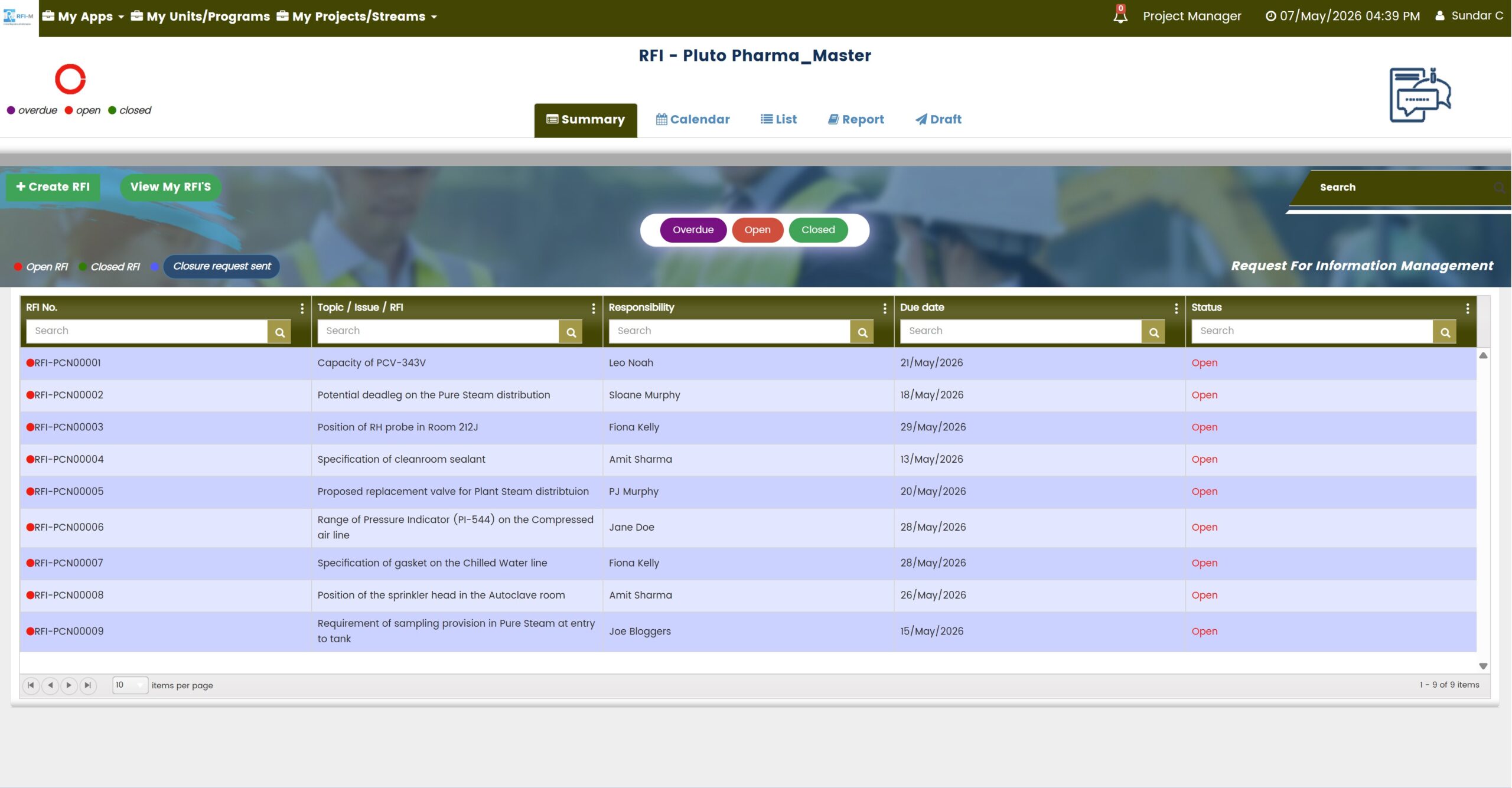
Summary View
Get a quick view of the summary of all RFI's in the default Summary View.
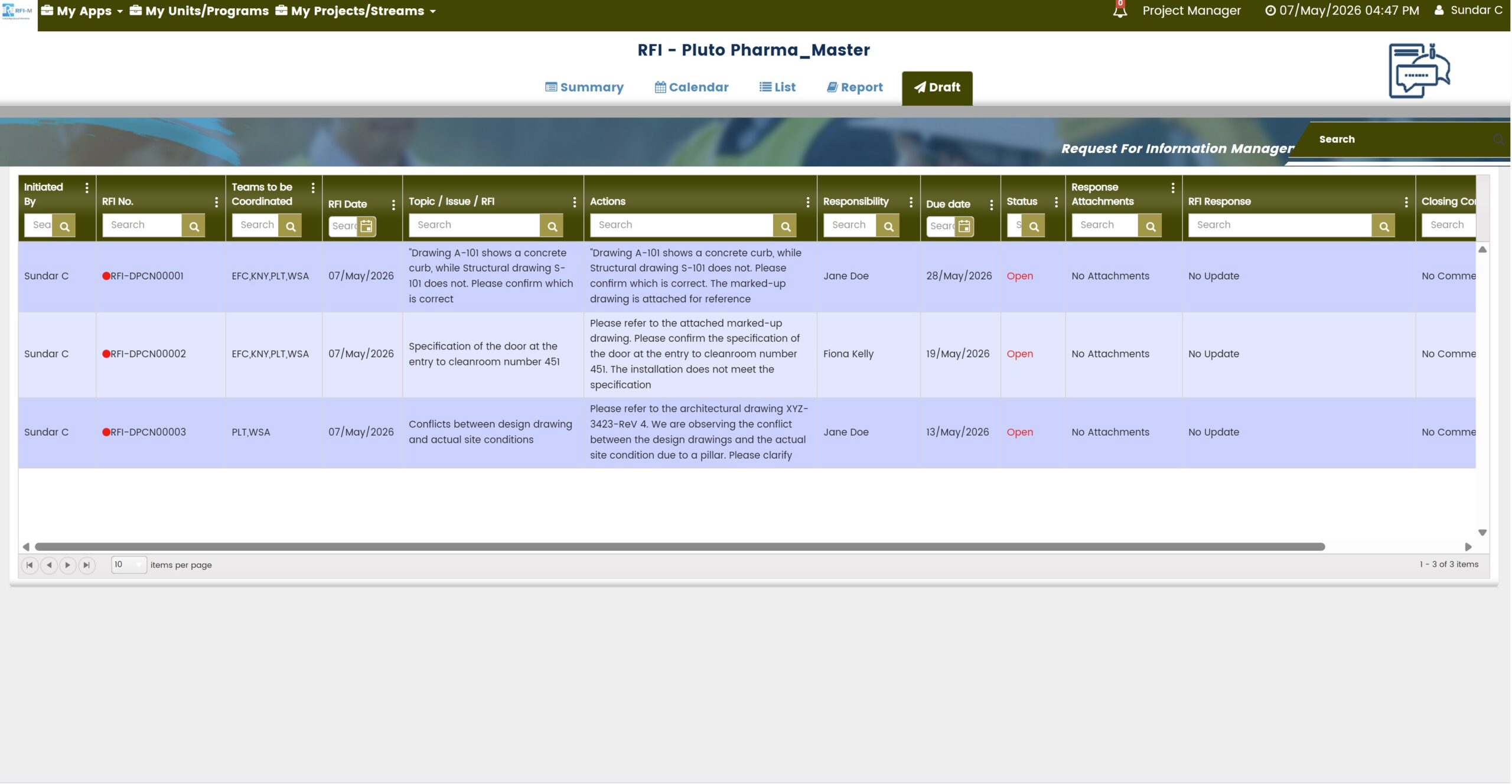
Draft Tab
Save all unfinished works on the Draft Tab and pick-up where you left.
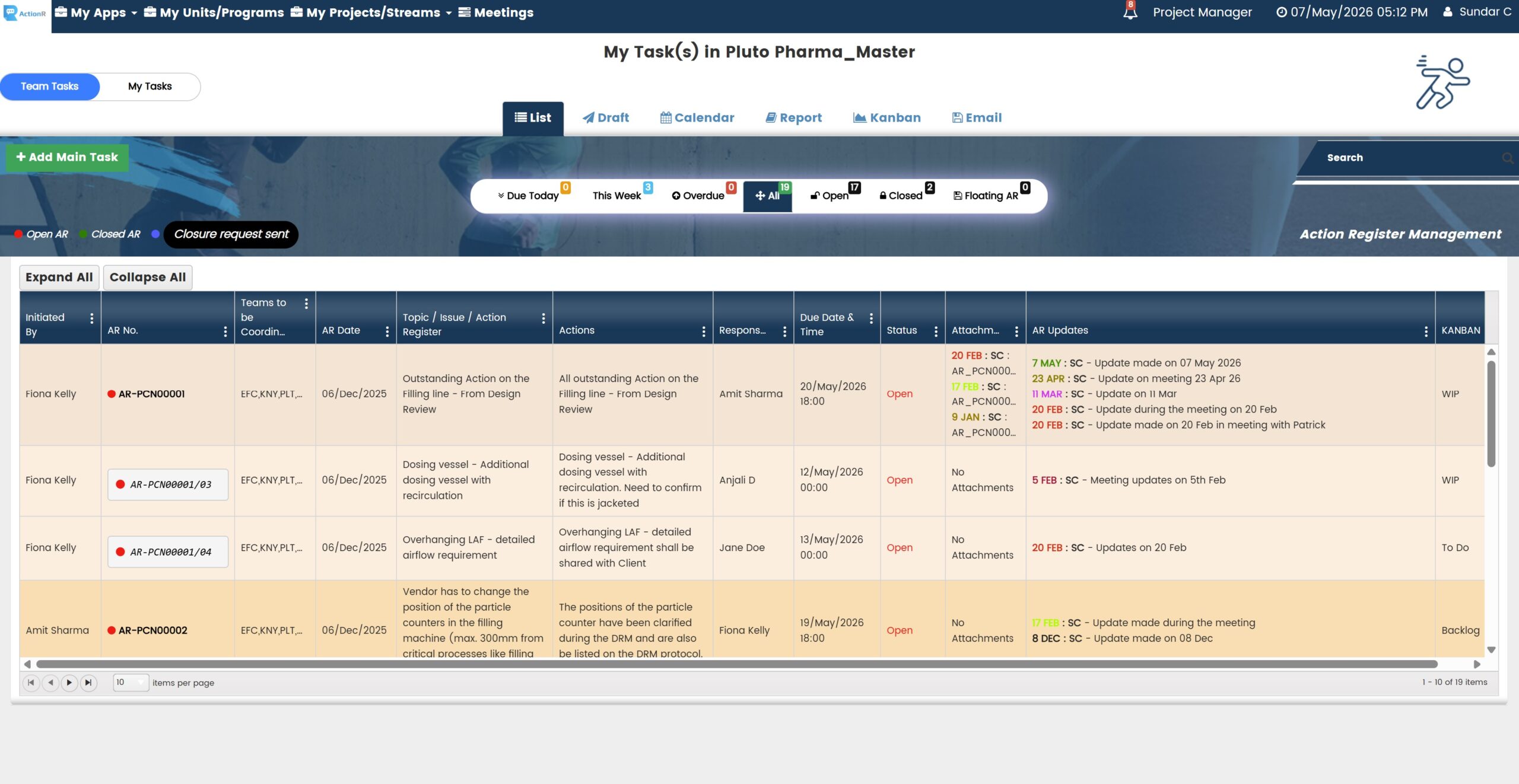
List View
Get a detailed view of all the RFI's and easily sort by systems/dates etc.
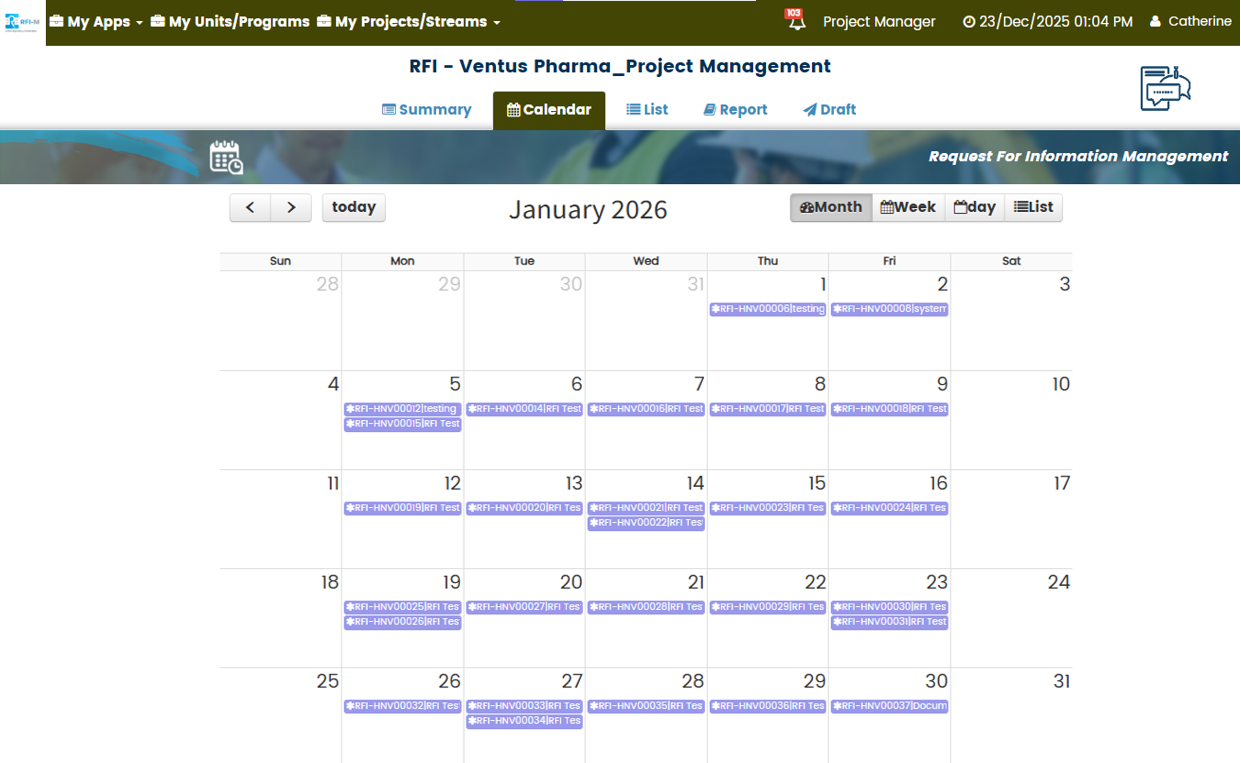
Plan using Calendar View
Plan and keep up with your project schedule to close your RFI'son time.
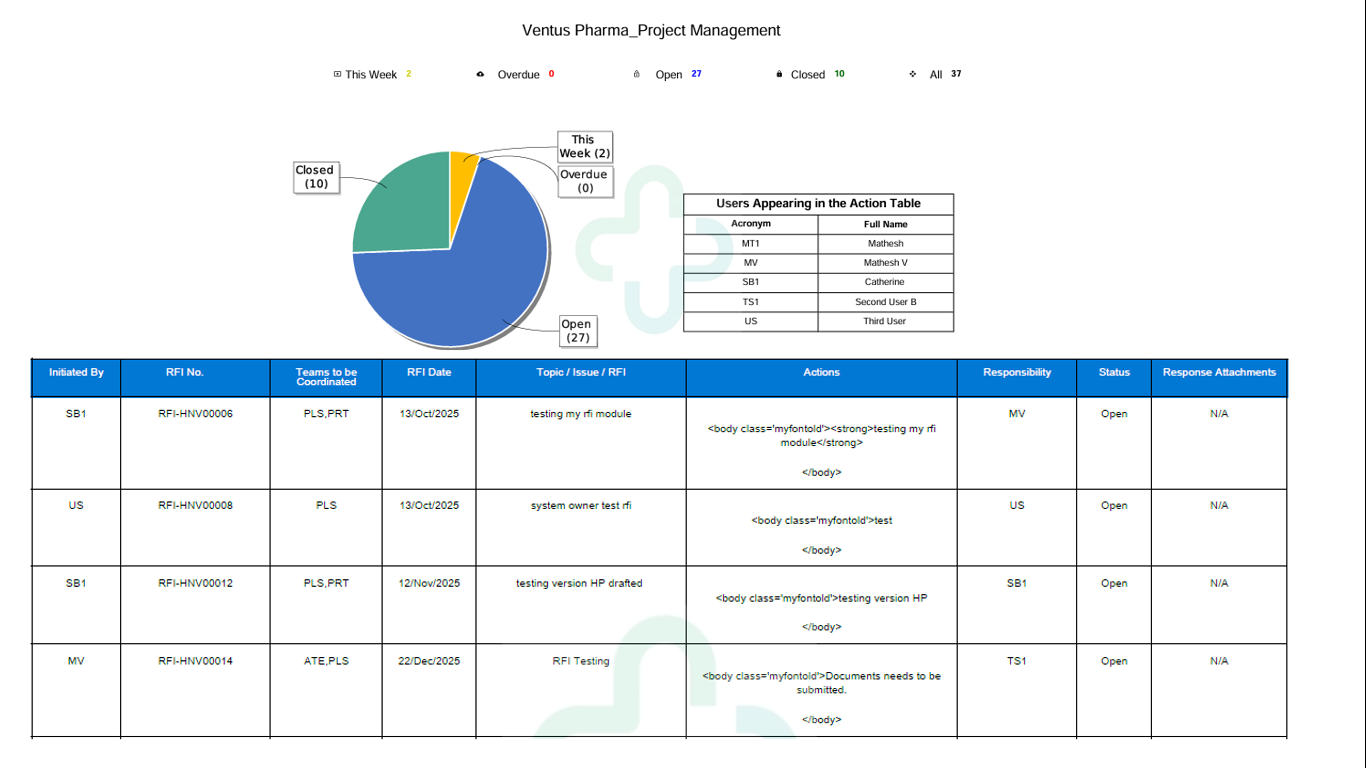
Customised Reports
Easily sort and create customised reports and export them to pdf or excel formats.
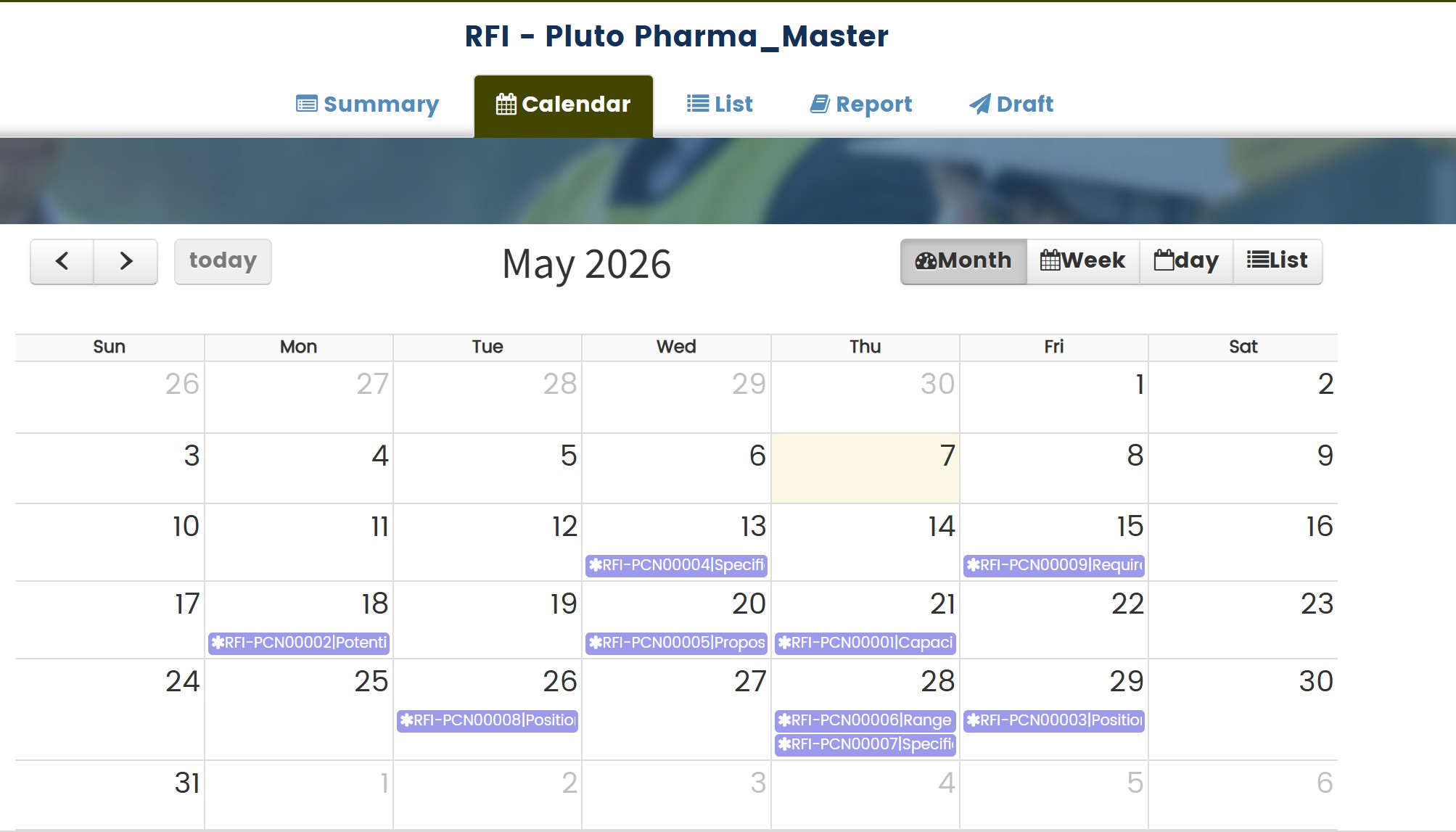
Calendar View
The intelligent approach to efficiently manage, exchange and close queries
– Facilitate the sharing of information crucial for project resolution and decision-making.
– Streamline communication channels, fostering collaboration among team members.
– Enhance transparency throughout the project lifecycle.
– RFI-M serves as the formal tool for raising and managing queries within multidisciplinary teams.
Built for seamless information management
Track and Manage
Our online platform facilitates seamless tracking and efficient management of formal RFI’s.
Timely Updates
Precise deadlines and automated reminders guarantee timely updates and closures.
Manage Centrally & Remotely
Ensure consistent communication between teams, regardless of their location
Consolidated Reports
In-built PDF report builder for quick distribution of RFI’s and record keeping.
Secure Management
Robust security measures to protect sensitive information throughout the entire process.
Customizable Tracking
Tailor the RFI format to incorporate Equipment No’s, Departments, Part Codes etc.
Data Tracking
Cloud platform minimizing the risk of data loss due to hardware failures.
Searchable Database
Keep all of your requests and responses together in an easily searched archive
Multi-lingual Selection
Options for multi language selection

Increase Collaboration

Access Globally 24/7

Centralised Data

Manage Securely
FAQ’S (Frequently Asked Questions)
RFI-M by goPLIMS is a centralised, digital Request for Information Management platform built to formally raise, track, respond to, and close RFIs across multidisciplinary teams. Unlike email chains or shared spreadsheets — where RFIs get buried, responses go unlinked, and document attachments become unmanageable — RFI-M keeps every request, response, clarification, and supporting document together in one structured, searchable record. Each RFI has a unique reference, a defined owner, a response deadline, and a full audit trail from submission to closure. The result is faster resolution, fewer miscommunications, and a permanent, retrievable record that is available to the entire project team — 24 hours a day, from any location.
RFI-M is built around three core pillars that reflect the natural lifecycle of any information request. Identify: diverse teams submit RFIs centrally, capturing the request with full context — equipment numbers, department, part codes, drawings, specifications, or any other relevant detail. Every RFI is assigned an owner, a due date, and a workstream, ensuring nothing falls through the cracks. Clarify: once submitted, the RFI enters a structured resolution workflow. Questions are raised, additional information is sought, and all communication between parties is documented within the RFI record — not scattered across email threads. This ensures ambiguities are resolved with full context preserved. Confirm: once the response is agreed and validated, the RFI is formally closed and the confirmed information — the answer, the referenced drawing, the agreed specification — is locked into the centralised repository, creating a reliable, searchable knowledge record for the duration of the project and beyond.
Beyond tracking individual requests, RFI-M functions as a living knowledge base for your project. Every closed RFI represents a formally confirmed piece of project knowledge — a clarified specification, a confirmed drawing revision, an agreed vendor response, or a resolved technical ambiguity. Over the life of a complex pharma project, hundreds or thousands of such clarifications are generated. In RFI-M, all of these are stored in a fully searchable, categorised archive rather than being lost in email folders or personal drives. New team members joining mid-project can search the RFI archive by keyword, equipment number, department, date, or responsible party to instantly access the context and decisions that preceded their arrival. For organisations running multiple projects, this archive becomes an institutional knowledge asset — reducing repeated queries, accelerating onboarding, and preventing the same questions from being raised and answered multiple times across different projects.
RFI-M provides four purpose-built views to give teams flexibility in how they monitor and manage their RFIs. Summary View is the default view, offering an at-a-glance status of all RFIs — how many are open, pending, overdue, or closed — giving project managers an instant health check of the information pipeline. List View provides a detailed, sortable table of all RFIs, filterable by system, date, responsible party, priority, or status — ideal for weekly review meetings and reporting. Calendar View maps all RFI due dates onto a calendar, making it easy to identify deadline clusters, resource conflicts, and at-risk closures before they become schedule problems.
In pharma projects, RFIs arise across every phase and discipline. During Design, Commissioning, Qualification and Validation, engineers raise RFIs to clarify P&ID interpretations, instrument calibration requirements, or test protocol ambiguities — all of which need to be formally documented and traceable. In equipment procurement, RFIs are used to clarify vendor specifications, material certifications, and Factory Acceptance Test requirements before purchase orders are finalised. In construction and fit-out, RFIs manage queries between the owner, architect, and contractor regarding design intent, drawing discrepancies, or specification conflicts. In regulatory submissions, RFIs can be used to formally track queries raised by or to regulatory authorities. RFI-M’s customisable tracking fields — Equipment Numbers, Department, Part Codes, Drawing References, and more — allow the RFI format to be tailored precisely to each of these use cases, making it suitable for the full range of pharma project types handled by goPLIMS clients.
One of the most significant hidden costs in large projects is the time spent re-answering questions that have already been resolved elsewhere. RFI-M’s searchable database addresses this directly. Every RFI — including its original question, all clarification exchanges, attachments, and the final confirmed response — is indexed and searchable by keyword, due date, responsible party, equipment number, department, or any other custom field. Before raising a new RFI, a team member can search the archive in seconds to confirm whether the same or a similar question has already been addressed. This not only eliminates duplicated effort but ensures that confirmed information — agreed specifications, approved drawings, validated responses — is reused consistently rather than being reinterpreted from scratch by different team members. For long-duration pharma projects with high team turnover, this searchable archive is one of the most practically valuable features in RFI-M.
No two projects have identical information structures. RFI-M allows each organisation to tailor the RFI format to incorporate the fields that matter most to their project. This means RFIs can be raised, filtered, sorted, and reported on using the exact taxonomy of the project rather than a generic structure. For a pharma facility build, this might mean tagging RFIs by process system and discipline. For a validation programme, it might mean linking RFIs to specific test protocols or qualification documents. Customisable tracking transforms RFI-M from a generic query log into a precisely configured information management tool that mirrors the structure of the project itself — making retrieval, reporting, and governance significantly more efficient.
RFI-M is hosted on a dedicated cloud infrastructure, meaning your project data is not stored on shared public servers or in unsecured email systems. Role-based access controls ensure that only authorised team members can view, raise, respond to, or close RFIs — and access can be configured at the project or workstream level. External parties such as vendors, contractors, or consultants can be given precisely scoped access to the RFIs relevant to them, without exposure to commercially sensitive or quality-critical information from other areas of the project. For pharma organisations handling proprietary formulation data, confidential engineering drawings, or commercially sensitive supplier agreements, RFI-M provides a significantly more secure environment than the emailed documents and shared drives that most teams currently rely on.
RFI-M is built for the reality of modern pharma projects — geographically distributed teams, multiple organisations, and cross-border vendor relationships. As a cloud-based platform, RFI-M provides secure 24/7 access to every authorised user regardless of location, time zone, or device. Multi-language selection allows individual users to interact with the platform in their preferred language, enabling seamless participation from teams in Europe, Asia-Pacific, North America, and beyond without relying on translation intermediaries or duplicate communication channels. Automated reminders notify RFI owners and respondents of approaching deadlines, removing the need for project managers to chase across time zones. Centralised, consolidated reporting means that a project lead in Dublin has the same real-time view of open RFIs as a site team in Singapore or a vendor’s engineering office in Germany.
RFI-M is one module within the goPLIMS Integrated Project Execution Platform and is designed to work in close conjunction with the broader suite. An RFI that results in a design change can be linked to a change request in ChangeM. Supporting documents referenced in an RFI can be formally managed and version-controlled in EDocM. Actions arising from an RFI can be tracked to closure in ActionR. This end-to-end connectivity means that project information does not exist in isolated silos — it flows through a connected, traceable system that reflects how pharma projects actually operate. For organisations building a complete digital execution environment, RFI-M is a critical component of the governed information backbone that links technical queries to decisions, documents, actions, and ultimately, project outcomes.
Yes, RFI-M supports the digitalisation of deviation and exception management by providing a structured workflow to raise, track, and resolve queries, issues, and clarifications in a compliant environment.
In pharmaceutical and regulated industries, deviations and exceptions often originate from project queries, technical clarifications, or site-level issues. RFI-M enables teams to formally log these as RFIs (Requests for Information), ensuring every issue is documented, assigned, and tracked to closure.
Each RFI is:
- Time-stamped and fully traceable
- Linked to relevant stakeholders and workstreams
- Managed through a structured lifecycle (raised → reviewed → responded → closed)
With role-based access control, only authorised users can view or respond to sensitive queries, ensuring data integrity and compliance.
By integrating RFIs into project execution workflows, RFI-M ensures that deviations and exceptions are not lost in emails or informal communication—improving response times, accountability, and audit readiness.
Yes, RFI-M supports knowledge management by capturing all project queries, responses, and decisions in a centralised and searchable system.
In pharma projects, a significant amount of knowledge is generated through RFIs—technical clarifications, design decisions, and issue resolutions. RFI-M ensures this knowledge is not lost by structuring and storing every interaction within the platform.
Over time, this creates a valuable knowledge repository where teams can:
- Refer to past RFIs and their resolutions
- Avoid repeating the same queries or mistakes
- Accelerate decision-making in future projects
With searchable records, structured workflows, and role-based visibility, RFI-M transforms day-to-day project communication into a long-term organisational knowledge asset.
By embedding knowledge capture into the RFI process, organisations gain better traceability, improved collaboration, and continuous learning across projects and operations.